
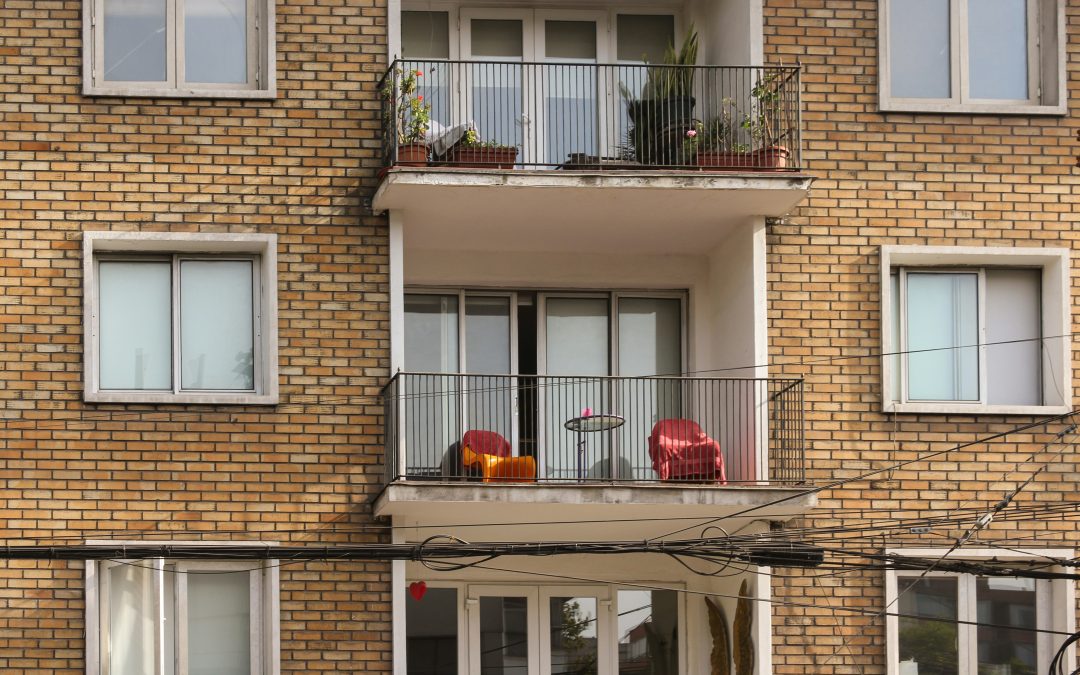
If you are dealing with a leaseholder refusing repairs, UK law provides freehold companies and flat owners with a range of enforcement options. This is particularly common where a balcony, terrace or demised structure is causing water ingress into communal areas or neighbouring flats — and can quickly escalate into a serious legal dispute.
Where this occurs, the freehold company or landlord may need to consider formal enforcement action. Early legal advice is strongly recommended, as the correct approach will depend on the wording of the lease and the specific circumstances.
1. Establishing Responsibility Under the Lease
The starting point is always the lease. Key issues to determine include:
- Whether the relevant structure (for example a balcony) is demised to the flat
- Whether the leaseholder has an express repairing obligation
- Whether the lease allows the landlord or freehold company to enter to carry out works if the leaseholder fails to do so
- Whether there is a forfeiture clause for breach of covenant
Responsibility for repair will turn entirely on the lease wording. A formal lease review by a solicitor should be undertaken before enforcement steps are taken. Where a leaseholder refusing repairs UK-wide is a recurring concern, early review of the lease terms is essential.
2. The Role of Buildings Insurance
Most blocks of flats are covered by a buildings insurance policy arranged by the freeholder or managing agent. It is important to distinguish between:
- Resultant damage: Insurance policies commonly cover damage caused by water escape or ingress into communal areas or neighbouring flats.
- Underlying defect or maintenance failure: Policies do not usually cover the cost of repairing the defective structure itself where the damage arises from lack of maintenance or deterioration.
Where insurers meet the cost of insured damage, they may in some circumstances seek recovery from the leaseholder responsible for the defect. Each policy must be considered individually. Insurance should be notified promptly where water ingress or damage occurs.
3. Enforcement Steps: Leaseholder Refusing Repairs UK
Before court proceedings are considered, the freehold company or landlord will normally:
- Obtain legal advice on the lease
- Write formally to the leaseholder identifying the breach
- Require the repair to be carried out within a reasonable period
- Warn that enforcement action may follow
A solicitor’s letter before action is often sufficient to prompt compliance.
4. Self-Help Provisions in the Lease
Some leases contain a clause allowing the landlord or freehold company to serve notice requiring repair, carry out the works if the leaseholder fails to comply, and recover the cost from the leaseholder as a debt. Such provisions must be exercised strictly in accordance with the lease terms.
Importantly, the freeholder cannot force entry into a flat without lawful authority. If access is refused, an application to court may be required.
5. Court Applications for Access or Compliance
If a leaseholder refuses access or continues to breach repairing obligations, the freehold company may consider applying to the court for:
- An injunction requiring access
- A declaration that the leaseholder is in breach
- Recovery of costs where permitted
This is often the most appropriate route where urgent repairs are required to prevent ongoing damage.
6. Section 146 Notice and Forfeiture
Many residential leases contain a forfeiture clause for breach of covenant. Before a Section 146 Notice can be served in relation to a residential lease, the alleged breach must first be admitted by the leaseholder, or determined by the First-tier Tribunal (Property Chamber) or a court.
This requirement arises under section 168 of the Commonhold and Leasehold Reform Act 2002. Further guidance on leasehold repairs and obligations is available on GOV.UK.
Forfeiture is a serious step and is rarely pursued to conclusion in residential settings. However, the process may be used as part of enforcement where a leaseholder persistently fails to comply with repairing obligations.
Failure to repair is generally treated as a continuing breach. Legal advice should be obtained before taking steps which might waive enforcement rights.
7. Shareholder or Director Status
In smaller converted buildings, leaseholders may also be shareholders or directors of the freehold company. However, obligations under the lease are legally separate from company roles. A leaseholder cannot usually be compelled to become a director unless the lease requires it. Directors must act in the best interests of the company and in accordance with its articles.
8. Early Legal Advice When a Leaseholder Refusing Repairs UK
Delays in addressing water ingress and structural repair disputes can result in:
- Increased damage
- Higher insurance claims
- Neighbour disputes
- Reduced property values
- Increased legal costs
Early legal intervention often resolves disputes before litigation becomes necessary.
How We Can Help With Leaseholder Refusing Repairs UK
Our property litigation solicitors advise freehold companies, managing agents, leaseholders and flat owners. We assist with:
- Lease interpretation
- Repair and maintenance disputes
- Injunction applications
- Section 146 procedures
- Insurance and cost recovery issues
- Tribunal and court proceedings
Based in the heart of Wembley Park, we act for clients across London and nationwide.
If you are dealing with a leaseholder refusing to carry out essential repairs, we recommend seeking legal advice at an early stage. Contact our property dispute team for a confidential discussion.
This article is provided for general information purposes only and does not constitute legal advice. Each lease and set of circumstances will differ. Specific legal advice should be obtained before taking or refraining from any action in relation to a leasehold dispute.